PSDF and World Bank Group Convene Expert Roundtable on Pakistan's Skills and Jobs Agenda

PSDF and World Bank Group Convene Expert Roundtable on Pakistan’s Skills and Jobs Agenda

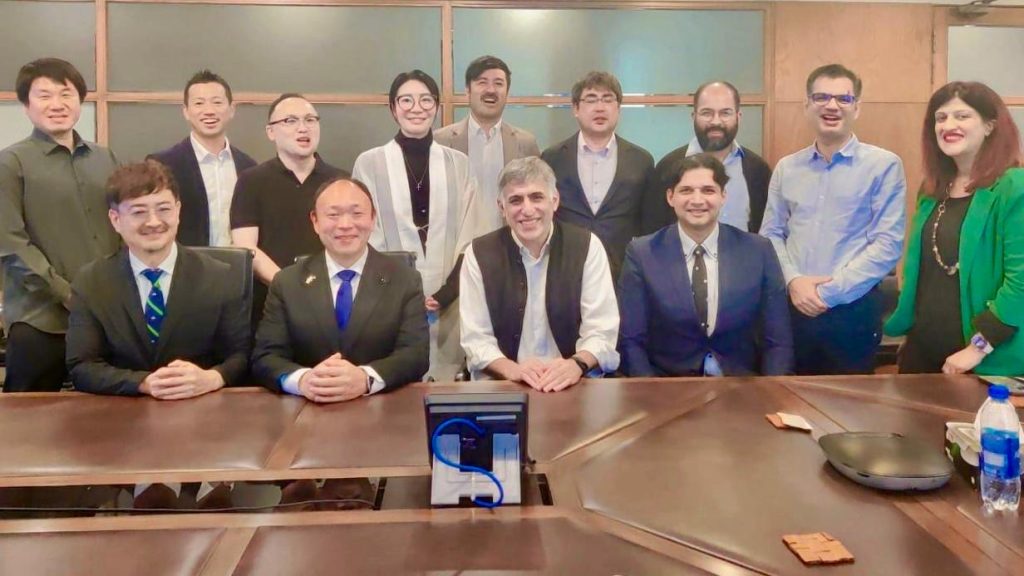
Lahore — The Punjab Skills Development Fund (PSDF), in partnership with the World Bank Group, hosted an expert roundtable on Pakistan’s Skills and Jobs Agenda, bringing together leaders from the health, technology, and government sectors to chart a clearer path from training to employment and from domestic skills development to global labour market access. The session was chaired by Mamta Murthi, Vice President of the World Bank Group’s People Vice Presidency, and moderated by Ahmed Khan, CEO of PSDF. Discussions centered on two priority sectors; Human Resources for Health (HRH) and IT & IT Outsourcing (ITO) along with the governance and labour mobility frameworks needed to support Punjab’s ongoing skills transformation. 

Opening the session, Mamta Murthi stressed that outcomes, not outputs, must drive the skills agenda. "The real test is not the number of certificates or the number of people trained. The real test is whether people land in meaningful jobs. That must be not a corollary, but the focus of skills and workforce development,” she said. Adnan Afzal Chattha, Chairman of the Chief Minister’s Task Force on Skills Development in Punjab, outlined the province’s commitment to aligning its qualifications with international benchmarks. Punjab has signed an MoU with UK awarding bodies to adopt the European Qualifications Framework (EQF) and is finalizing an agreement with an international healthcare placement partner to connect qualified Pakistani health workers with European markets.  

"We want to train our workforce to the standard of the destination, not just the standard of the sending institution. Skilled manpower export is not a peripheral policy ambition, it is a macroeconomic imperative,” he said. Ahmed Khan, CEO of PSDF, reflected on the outcomes of the day’s discussion: "This roundtable has surfaced both the depth of the challenge and the clarity of the path forward. We are going to start working on the action steps, and we hope to have many more of these conversations until we get it right.” 

The roundtable highlighted strong momentum in Pakistan’s IT sector. IT exports crossed USD 437 million in December 2025, the first month ever to exceed USD 400 million with the sector growing at 20 percent year-on-year. IT sector employability has risen from 10 percent to 32 percent over the past two to three years, driven by targeted, demand-led curriculum reform, evidence that this model delivers results. A national centralized assessment of 41,000 final-year IT and CS graduates, conducted in April 2026 using industry-designed questions, marks a major step toward credible, independent quality measurement across the sector. 

On the health front, Pakistan produces roughly 5,600 nursing graduates annually, with international placement demand rising sharply, particularly in Europe and the Gulf. Participants agreed that pre-departure language preparation, cultural immersion programs, and stronger embassy-level facilitation are the investments most likely to accelerate Pakistan’s growing footprint in international health labour markets. 

On governance, Punjab’s establishment of an independent Department for Skills Development and Entrepreneurship was recognized as a landmark institutional reform, bringing the province’s skills bodies under a single, unified accountability structure. Participants also identified formally mapping Pakistan’s National Vocational Qualifications Framework to the European Qualifications Framework as the most critical next step in unlocking full access to European labour markets, a process Punjab is already advancing through its engagement with UK awarding bodies.  

Adnan Afzal Chattha confirmed that a three-year budget proposal has been submitted to the Chief Minister for approval, covering EQF adoption, international employer partnerships, Punjab Board of Technical Education reform, and the scale-up of programs for rural women, IT, hospitality, and agriculture. "We are always looking forward to your guidance and experience. Wherever you are working with other stakeholders in the world, we are ready to learn from you and work with you,” he added. 

PSDF remains committed to working with the World Bank Group and international partners to ensure Punjab’s skilled workforce is equipped not just with certificates, but with real access to meaningful, sustainable employment at home and abroad. 

PSDF MRC MoU Skilled Youth

PSDF and Migrant Resource Centre Pakistan Partner to Strengthen Safe Migration Pathways

PSDF and the Migrant Resource Centre (MRC) Pakistan have signed a MoU to build a coordinated framework for promoting safe, legal, and informed international migration among beneficiaries of the PSDF Parwaaz Card – a Chief Minister Punjab initiative under the Maryam Nawaz Hunarmand Naujawan.

MRC will deliver pre-departure counselling sessions, awareness workshops, and one-on-one guidance on migration rights, documentation requirements, visa processes, and the risks of irregular migration. PSDF will identify and mobilize trained candidates for international employment opportunities, while facilitating access to pre-departure training and certifications where required.

The collaboration addresses a critical gap in Pakistan’s migration ecosystem: ensuring that skilled workers heading abroad are equipped not only with technical competency, but also with clear information on safe migration pathways, legal protections, and the support services available to them.

"By integrating migration governance and counselling, we are ensuring our beneficiaries transition to international employment with confidence and security,” said Ahmed Khan, CEO of PSDF.

Shazia Rafiq, Senior MRC Counsellor, added "This partnership exemplifies how government, international institutions, and civil society can work together to protect and empower migrants by embedding migration safety within skills training.”

As Pakistan continues to meet the growing demand for skilled talent in global markets, PSDF and MRC will work closely to ensure that prospective migrants carry not just in-demand skills, but also the awareness and support they need for a successful career overseas.

The partnership aims to strengthen sustainable employment outcomes for skilled workers while advancing Punjab’s vision of becoming a leading hub of globally competitive, export-ready human capital.

Qatar Employment | Tabeer

65 Punjab Youth Secure Overseas Jobs as Lead Workers in  Qatar Under PSDF–Tabeer Program 

Flagship initiative of the Chief Minister’s Skilled Punjab Program expected to generate nearly  USD 250,000 in annual remittances 

LAHORE: PSDF, through its Tabeer program, launched under the Chief Minister’s Skilled Punjab Program,has successfully facilitated overseas employment for more than 65 young Pakistanis, who received their job offer letters on Friday to begin work as Lead workers in Qatar. 

The placements mark a dual milestone; securing dignified, well-paying employment for Punjab’s youth while strengthening Pakistan’s broader economic resilience. 

Collectively, more than 65 workers in this batch are expected to contribute close to USD 250,000 annually in remittances, injecting much-needed foreign exchange into the economy, supporting households across the province,  and reinforcing Pakistan’s balance of payments. On average, each Pakistani worker abroad  sends home  an estimated USD 3,000- 5,000 a year, part of more than USD 32 billion in remittances Pakistan received last year. 

A model for skills-driven economic growth. The PSDF–Tabeer program is designed to connect Pakistani youth with overseas labour markets  through demand-driven training. The decision to place candidates specifically as Lead Workers reflects the program’s emphasis on preparing the workforce not only for employment, but for roles of responsibility and leadership abroad. 

Delivered by PSDF in collaboration with Alif – Recruitment C Manpower Solutions, the program ensures that participants are equipped with the right skills, certifications,  and job-readiness to meet international employer expectations. 

As one of the first large-scale initiatives focused on structured overseas placements, PSDF–Tabeer positions itself as more than a training program, it is a blueprint for channeling  Pakistan’s demographic dividend into the global labour market.  

"For us, this is not only about creating jobs but about transforming futures. Through PSDF–Tabeer, young Pakistanis are securing dignified, well-paying positions abroad, contributing to their families and to the economic strength of Pakistan,” said Ahmed Khan,  CEO, PSDF. 

"This milestone aligns with the Chief Minister’s vision of exporting skilled workers to the Gulf region. 

It is only the beginning of what we aim to accomplish, as many more such opportunities are  in the  pipeline. The journey has just started, and there is a lot more to come,” added Adnan Afzal Chattha, Chairperson of the CM Task Force on  Skills Development. 

Through demand-driven programs such as Tabeer, PSDF works to unlock prosperity for individuals,  families, and the nation by aligning training with real market needs. 

PSDF Pehchan - 1000 Transgenders enter workforce

Over 1,000 Transgender Graduates Enter Workforce Through Punjab’s First-Ever Skills Program under CM’s Skilled Punjab Initiative

Lahore – From salons in Lahore to IT startups in Multan, 1,054 transgender individuals have transformed their lives through PSDF | Pehchan program – Skilling Program for Transgenders Under CM’s Skilled Punjab Initiative, many entering the workforce for the first time in history. 980+ transgenders individuals have already secured jobs with reputable employers, while others are launching their own small businesses, marking a breakthrough for industry linkages and inclusion.

This initiative directly supports the Government of Punjab’s vision under Chief Minister Maryam Nawaz to create a Skilled Punjab where every citizen regardless of gender or identity has access to dignified livelihoods. By prioritizing vulnerable and marginalized communities, PSDF | Pehchan reflects the government’s broader mission of inclusive growth, social justice, and economic empowerment.

PSDF | Pehchan launched in November 2024 under the Chief Minister’s Skilled Punjab Initiative, is reversing this narrative by providing transgender persons with pathways to dignity, opportunity, and recognition.

Delivered by PSDF in collaboration with 18+ training service providers like Depilex, Khawaja Sira Society & STEP; PSDF | Pehchan equips participants with high-demand skills in Beauty & Grooming, Culinary Arts, Performing Arts, Information Technology, Handicrafts, Digital Freelancing.

Alongside technical training, the program ensures holistic support: monthly stipends, travel allowances, professional toolkits, and assistance with NADRA and PSER registration giving participants the tools and recognition to enter the workforce with dignity long denied to them.

Since its launch, PSDF | Pehchan has reached trainees in Lahore, Faisalabad, Multan, Bahawalpur, and Gujranwala. Graduates are stepping into formal jobs, freelancing careers, and entrepreneurial ventures, setting an example of what inclusive skills development can achieve.

“For too long, transgender persons have been denied opportunities others take for granted. With Pehchan, we are not just training them — we are opening doors to dignity, careers, and inclusion in Punjab’s economy,” said Ahmed Khan, CEO PSDF.

As the first dedicated skills program for the transgender community in Punjab, Pehchan represents more than training it is a replicable model for inclusive economic growth, aligned with SDG 8 (Decent Work) and SDG 10 (Reduced Inequalities). It reaffirms PSDF’s mission to build an economy where no one is left behind.

PSDF | Tabeer places over 100 Pakistani graduates in Saudi Arabia

PSDF | Tabeer International Placement Program Places Over 100 Skilled Pakistani Graduates in Saudi Arabia

Lahore: The Punjab Skills Development Fund (PSDF) has successfully facilitated the overseas placement of more than 100 skilled Pakistani graduates in Saudi Arabia’s construction and hospitality sectors through its flagship Tabeer International Placement Program, launched under the Chief Minister’s Skilled Punjab Initiative. The achievement marks a significant milestone in PSDF’s efforts to create sustainable international employment opportunities for Punjab’s youth while strengthening Pakistan’s position in the global labour market. 

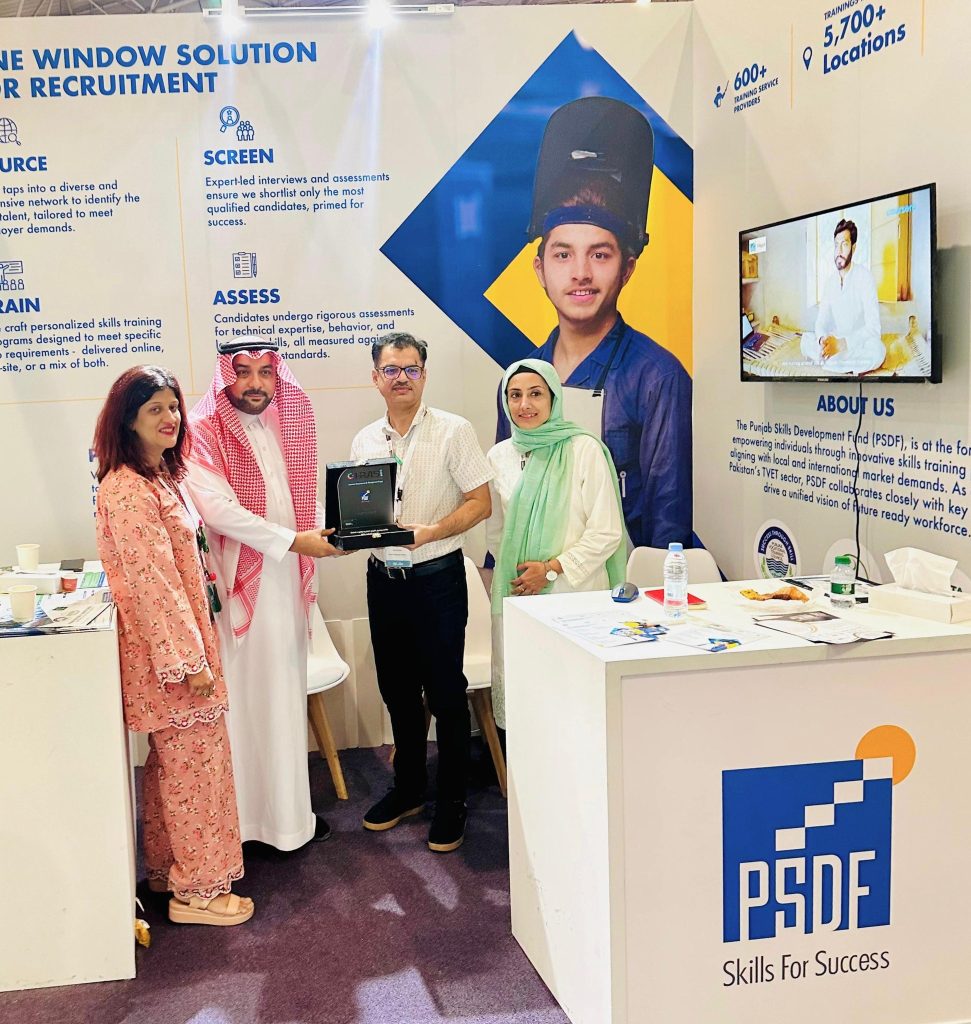
Through the Tabeer International Placement Program, PSDF has established itself as a comprehensive one-window solution for overseas employment, managing every stage of the workforce mobility process under one roof. From identifying international market demands and designing employer-led training programs to certification, job matching, visa facilitation, and pre-departure support, PSDF ensures a seamless pathway from skills development to confirmed overseas employment. 

The program operates in close collaboration with leading Saudi employers to develop training curricula that directly align with industry requirements. Candidates undergo a rigorous selection and assessment process, including technical training, workplace readiness modules, soft skills development, and employer-led evaluations. Only those who successfully meet the required standards are offered confirmed employment opportunities before departure, providing confidence and certainty to both graduates and employers. 

Speaking on the success of the initiative, PSDF CEO Ahmed Khan stated that the organization is committed to creating meaningful economic opportunities for skilled Pakistanis through structured and transparent international placement mechanisms. He noted that by managing the entire process from training and certification to employment confirmation and visa processing, PSDF has significantly reduced the challenges traditionally faced by job seekers pursuing overseas employment opportunities. This integrated approach ensures that candidates arrive at their destinations fully prepared, with valid employment contracts, completed documentation, and the skills required to perform effectively from their first day at work. 

The program is already delivering positive outcomes for participating graduates and their families. Individuals placed in Saudi Arabia are earning competitive salaries, contributing to their households through foreign remittances, and improving their long-term economic prospects. The initiative is also helping strengthen local communities across Punjab by creating new avenues for economic mobility and financial stability. At the same time, Saudi employers are benefiting from access to a dependable pipeline of skilled and job-ready professionals who have been trained according to international standards and industry expectations. 

The success of the Tabeer International Placement Program reflects PSDF’s broader commitment to equipping youth with market-relevant skills and connecting them with quality employment opportunities both within Pakistan and abroad. Building on the strong results achieved in Saudi Arabia, PSDF is now preparing to expand its international placement services to additional Gulf Cooperation Council (GCC) countries and explore opportunities in emerging sectors such as healthcare, retail, logistics, and other high-demand industries. 

As Pakistan’s largest skills development fund, PSDF continues to play a leading role in workforce development and international talent mobility. Through innovative programs such as Tabeer International Placement, the organization is not only empowering individuals with employable skills but also contributing to economic growth by positioning Pakistan as a trusted source of globally competitive talent. The initiative represents a significant step towards creating sustainable employment pathways for skilled youth and supporting the vision of a prosperous and economically empowered Punjab. 

PSDF Partners with iamtheCODE to Empower Women and Girls through Coding and STEAMED Education

Punjab Skills Development Fund (PSDF), in line with Chief Minister of Punjab, Maryam Nawaz Sharif’s vision of empowering women and its unwavering commitment to skill development, has partnered with iamtheCODE, a global movement dedicated to advance STEAMED (Science, Technology, Engineering, Arts, Mathematics, Entrepreneurship, and Design) education. This partnership aims to empower women and girls across Pakistan by providing them with essential coding skills and digital literacy, aligning with iamtheCODE’s global mission to train 1 million female coders by 2030.

Nearly 49% of the Pakistan’s population comprises of women and girls but are facing significant barriers to education and employment that limits opportunities for meaningful economic and social contributions (Source: UN).

The collaboration between PSDF and iamtheCODE brings a unique approach to skills development, leveraging innovative resources and global connectivity. Learners will benefit from access to iamtheCODE’s proprietary digital platform and a 12-week curriculum, preloaded on devices to ensure seamless accessibility. Moreover, the program emphasizes on mentorship and leadership development, engaging participants through hackathons, leadership talks, and mentorship sessions led by community leaders. Virtual communication will play a vital role, with regular Zoom sessions connecting learners with mentors and global experts to broaden their perspectives.

Lady Mariéme Jamme, CEO of iamtheCODE said while highlighting the program’s impact, “iamtheCODE is thrilled to partner with PSDF to bring our mission to Pakistan. Together, we will create opportunities for women and girls to learn coding, build sustainable livelihoods, and become change-makers in their communities.”

To ensure sustainability, PSDF will facilitate community outreach, infrastructure, and spaces, while iamtheCODE will focus on capacity building by training local mentors and educators. By leveraging the strengths of both organizations, this partnership aims to transform lives, enhance employability, and position Pakistan as a leader in inclusive digital education.

Ahmed Khan, CEO of PSDF expressed his views about the collaboration stating, “This partnership reflects our shared vision of unlocking the potential of women and girls through education and skills development. With iamtheCODE’s innovative platform and curriculum, we aim to equip learners in Pakistan with the tools they need to thrive in the digital economy and drive meaningful social change.”

Punjab’s Youth to Access Global Opportunities Through Landmark Pakistan-Japan Collaboration

Punjab Skills Development Fund (PSDF) has taken a significant step in socio-economic development through global upskilling initiatives under the visionary leadership of Chief Minister Punjab, Maryam Nawaz Sharif, and facilitated by Mr. Adnan Afzal Chattha, Chairman of the Chief Minister’s Task Force for Skill Development. A historic agreement was signed between Hazza Institute of Technology (HAZZA), Japan-Pakistan Innovative Institute (JPII), and PSDF to establish state-of-the-art Japanese language and cultural training centers in Punjab, providing a gateway to global opportunities for Pakistani youth in Japan.


This initiative aligns with the Chief Minister’s mission to empower the youth of Punjab by equipping them with internationally competitive skills and creating pathways for employment in high-demand sectors abroad, including information technology, logistics, elderly care, hospitality, and agriculture.


The collaboration includes several key highlights, such as the establishment of six Japanese Language and Cultural Training Centers in Punjab. Through this initiative, 2,000 youth will receive training on the Japanese language, culture, and professional standards. Moreover, in partnership with JPII, guaranteed job placements will be provided in Japan for the trained individuals. Additionally, this collaboration will enhance bilateral cooperation and cultural exchange between Pakistan and Japan.


Mr. Mitsuru Kiuchi, Chairman of JPII, expressed his excitement about the partnership, stating, “This collaboration is a bridge connecting Japan’s growing demand for skilled workers with Punjab’s exceptional talent. Together, we will create opportunities that foster economic growth and cultural exchange, strengthening ties between our nations.”


Ahmed Khan, CEO of PSDF, added, “This initiative goes beyond training; it opens global doors for Punjab’s youth, enabling economic independence and driving socio-economic growth in the province.”
Both HAZZA and PSDF will provide financial, logistical, and operational support to ensure the program’s seamless implementation, including recruitment, training, and placements in Japan. The partnership also brings Japanese industry expertise to Punjab, with native language instructors delivering culturally immersive training and conducting final screenings.


Mr. Adnan Chattha, who played a pivotal role in facilitating the agreement, remarked, “This partnership is a monumental milestone in addressing unemployment in Punjab and creating a globally competitive workforce. It reflects our commitment to empowering the youth with opportunities that transform their lives and contribute to the province’s development.”


The agreement was signed in the presence of dignitaries from Pakistan and Japan, marking the beginning of a transformative journey for Punjab’s youth in the global arena.

PSDF Launches CM’s Skilled Punjab Program to Facilitate International Placement of Youth in GCC Markets

Aligned with the Chief Minister of Punjab, Maryam Nawaz Sharif’s mission, the Punjab Skills Development Fund (PSDF) has launched a program, CM’s Skilled Punjab Program – International Placement, a visionary initiative aimed at opening global doors for Pakistan’s youth. This groundbreaking program will prepare young Pakistanis with the tools they need to excel abroad, strengthening both their futures and Pakistan’s economy.


In 2021, remittances contributed a significant 21% to Pakistan’s GDP, highlighting their vital role in the nation’s economy (Source: Asian Development Bank). Recognizing this, PSDF has identified the Gulf Cooperation Council (GCC) region, particularly Saudi Arabia, as a key market for placing Punjab’s youth. To support this vision, PSDF will provide skill development aligned with the specific demands of the international job market.


The initial phase of this program will provide demand-driven skills training and secure international job placements for 10,000 youth individuals in GCC markets. Moreover, the program will address high global demand for skilled labor in sectors such as healthcare, construction, hospitality, and retail. This 2-year program will encourage remittance inflows and will support the overall economic growth of Pakistan.


During the meeting, Chairperson of the CM Task Force on Skills Development, Adnan Afzal Chattha, stated, “We have carefully identified specific trades in which Punjab’s youth will be trained to enhance their chances for international placement. This program is designed to provide comprehensive training across sectors, significantly improving the likelihood of successful international employment for the trainees. Moreover, this increased interaction will facilitate the exchange of technical expertise and best practices, creating a more efficient flow of information and fostering innovation between countries.”


This program aims not only to provide financial stability for the youth but also to alleviate the economic burden on the country by improving resource allocation. Additionally, by increasing the number of skilled workers employed abroad, Pakistan will benefit from the resulting remittances, which can contribute positively to the economy.


Ahmed Khan, CEO of PSDF, said, “This program can improve Pakistan’s global reputation as a source of highly skilled talent, consequently, attracting further international collaboration and investment.”

PSDF Launches CM’s Skilled Punjab Program for Transgenders largest skills development funding for transgenders

In a groundbreaking initiative by Chief Minister of Punjab, Maryam Nawaz Sharif, Punjab Skills Development Fund (PSDF) has launched a new program, CM’s Skills Development Program for Transgenders to drive social change and inclusion. The primary focus of this program is to empower the transgender community through comprehensive skills development and income generation opportunities through the provision of toolkits and concessionary loans.


Pakistan’s transgender community is estimated to be over 4 million but remains marginalized. Across the country only 20,000 transgender individuals are registered, resulting in exclusion from formal education, skills training and employment opportunities. In light of these challenges, CM Punjab is eager to empower transgender community by providing access to formal education and training in market-relevant trades.


The objective of this program is to skill 2,200 transgender individuals and provide them with on-the-job training resulting in meaningful employment opportunities over 2 years. This program aims to focus on skills training in market-relevant trades like performing arts, beauty services, domestic tailoring, culinary arts and IT with an inclusive approach that incorporates Gurus and other transgender individuals as trainers. This ensures that the training is not only comprehensive but also culturally sensitive and empathetic, with dedicated classrooms thoughtfully designed to support the unique needs of the transgender community.


In order to mobilize transgender individuals for the program, PSDF has entered a strategic partnership with Khawaja Sira Society. Mahnoor Chaudary, Director of Khawaja Sira Society, emphasized on what part they will play to make this collaboration fruitful saying, "We will identify and mobilize potential transgender trainees through community engagement and will facilitate the creation of CNICs, provide access to HIV testing, and conduct capacity-building sessions to raise awareness about the program’s outcomes. Additionally, we will ensure continuous collaboration with PSDF to track progress and ensure successful integration into the workforce.”


Financial support is a key component of the program as trainees will have access to concessionary micro-finance and toolkits increasing the prospects of starting businesses or securing jobs. Additionally, the program will assist transgender individuals with registration and documentation with NADRA, enhancing their social and financial inclusion. The integration of both social and financial support ensures a more inclusive society where transgender individuals can contribute to and benefit from the economic mainstream.


Ahmed Khan, CEO of PSDF, said "We are thrilled to launch this program, which represents a significant step towards social inclusion and empowerment for Pakistan’s transgender community. It will prove to be a significant step in achieving an equitable and inclusive society.”

Pehchan-Toolkit-Ceremony

200+ Transgender Persons Receive Toolkits to Begin Their Professional Journey Under the Pehchan Program 

From beauty salons to digital platforms, transgender individuals are stepping into new careers with tools that turn skills into livelihoods. In a country where nearly 95% of transgender individuals remain excluded from formal employment opportunities, the Government of Punjab’s vision under the Chief Minister’s Skilled Punjab Program is to create an inclusive Punjab – one that ensures access to skills, opportunities, and income generation for all, regardless of gender. 

In line with this vision, more than 200 transgender individuals have received toolkits under PSDF | Pehchan program to begin their professional journeys in high-demand trades including Beauty & Grooming, Culinary Arts, Performing Arts, Information Technology, Handicrafts, and Digital Freelancing. 

The toolkit distribution ceremony marked a milestone in empowering the transgender community with the resources to translate their training into sustainable and dignified livelihoods. Each toolkit was tailored to the respective trade, enabling participants to start freelancing, launch small businesses, or secure employment opportunities immediately. 

Speaking at the event, Ahmed Khan, CEO PSDF said: 

“This initiative goes beyond training. By equipping our transgender trainees with toolkits, we are providing them with the means to transform their skills into dignified sources of income. This is not just about economic empowerment but about creating inclusion and opportunity for every segment of society.” 

Adnan Afzal Chattha, Chairperson of the CM Task Force on Skills Development, added “The Government of Punjab is committed to building an inclusive and skilled workforce. Programs like Pehchan reflect the Chief Minister’s vision of empowering every individual, regardless of gender, to earn a dignified living. The success of these trainees is a success for all of Punjab.” 

PSDF | Pehchan program is the first of its kind in the province aimed specifically at skilling and uplifting the transgender community. Through partnerships with 18+ leading training service providers, including STEP, Hunerkada, Skill Up and Khawaja Sira Society, the program provides market-relevant skills, mentorship, and post-training support to ensure long-term impact. 

The distribution of toolkits is expected to accelerate the program’s outcomes, enabling graduates to contribute productively to the economy while pursuing dignified and independent livelihoods.