
 Helpline:
 ہیلپ لائن:


















Press Release
PSDF and World Bank Group Convene Expert Roundtable on Pakistan’s Skills and Jobs Agenda
5 June 2026
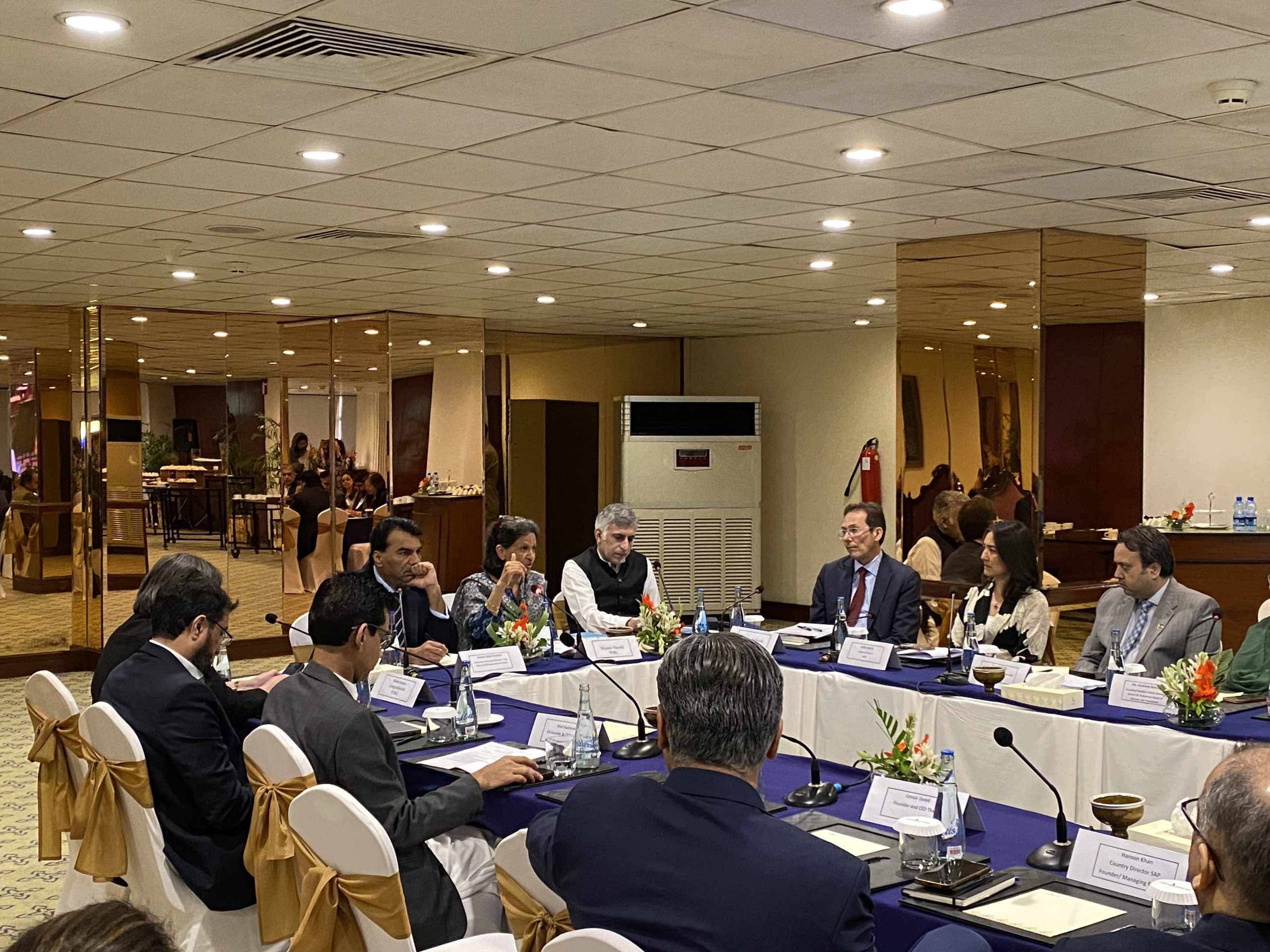
Lahore — The Punjab Skills Development Fund (PSDF), in partnership with the World Bank Group, hosted an expert roundtable on Pakistan’s Skills and Jobs Agenda, bringing together leaders from the health, technology, and government sectors to chart a clearer path from training to employment and from domestic skills development to global labour market access. The session was chaired by Mamta Murthi, Vice President of the World Bank Group’s People Vice Presidency, and moderated by Ahmed Khan, CEO of PSDF. Discussions centered on two priority sectors; Human Resources for Health (HRH) and IT & IT Outsourcing (ITO) along with the governance and labour mobility frameworks needed to support Punjab’s ongoing skills transformation.
Opening the session, Mamta Murthi stressed that outcomes, not outputs, must drive the skills agenda. “The real test is not the number of certificates or the number of people trained. The real test is whether people land in meaningful jobs. That must be not a corollary, but the focus of skills and workforce development,” she said. Adnan Afzal Chattha, Chairman of the Chief Minister’s Task Force on Skills Development in Punjab, outlined the province’s commitment to aligning its qualifications with international benchmarks. Punjab has signed an MoU with UK awarding bodies to adopt the European Qualifications Framework (EQF) and is finalizing an agreement with an international healthcare placement partner to connect qualified Pakistani health workers with European markets.
“We want to train our workforce to the standard of the destination, not just the standard of the sending institution. Skilled manpower export is not a peripheral policy ambition, it is a macroeconomic imperative,” he said. Ahmed Khan, CEO of PSDF, reflected on the outcomes of the day’s discussion: “This roundtable has surfaced both the depth of the challenge and the clarity of the path forward. We are going to start working on the action steps, and we hope to have many more of these conversations until we get it right.”
The roundtable highlighted strong momentum in Pakistan’s IT sector. IT exports crossed USD 437 million in December 2025, the first month ever to exceed USD 400 million with the sector growing at 20 percent year-on-year. IT sector employability has risen from 10 percent to 32 percent over the past two to three years, driven by targeted, demand-led curriculum reform, evidence that this model delivers results. A national centralized assessment of 41,000 final-year IT and CS graduates, conducted in April 2026 using industry-designed questions, marks a major step toward credible, independent quality measurement across the sector.
On the health front, Pakistan produces roughly 5,600 nursing graduates annually, with international placement demand rising sharply, particularly in Europe and the Gulf. Participants agreed that pre-departure language preparation, cultural immersion programs, and stronger embassy-level facilitation are the investments most likely to accelerate Pakistan’s growing footprint in international health labour markets.
On governance, Punjab’s establishment of an independent Department for Skills Development and Entrepreneurship was recognized as a landmark institutional reform, bringing the province’s skills bodies under a single, unified accountability structure. Participants also identified formally mapping Pakistan’s National Vocational Qualifications Framework to the European Qualifications Framework as the most critical next step in unlocking full access to European labour markets, a process Punjab is already advancing through its engagement with UK awarding bodies.
Adnan Afzal Chattha confirmed that a three-year budget proposal has been submitted to the Chief Minister for approval, covering EQF adoption, international employer partnerships, Punjab Board of Technical Education reform, and the scale-up of programs for rural women, IT, hospitality, and agriculture. “We are always looking forward to your guidance and experience. Wherever you are working with other stakeholders in the world, we are ready to learn from you and work with you,” he added.
PSDF remains committed to working with the World Bank Group and international partners to ensure Punjab’s skilled workforce is equipped not just with certificates, but with real access to meaningful, sustainable employment at home and abroad.


